
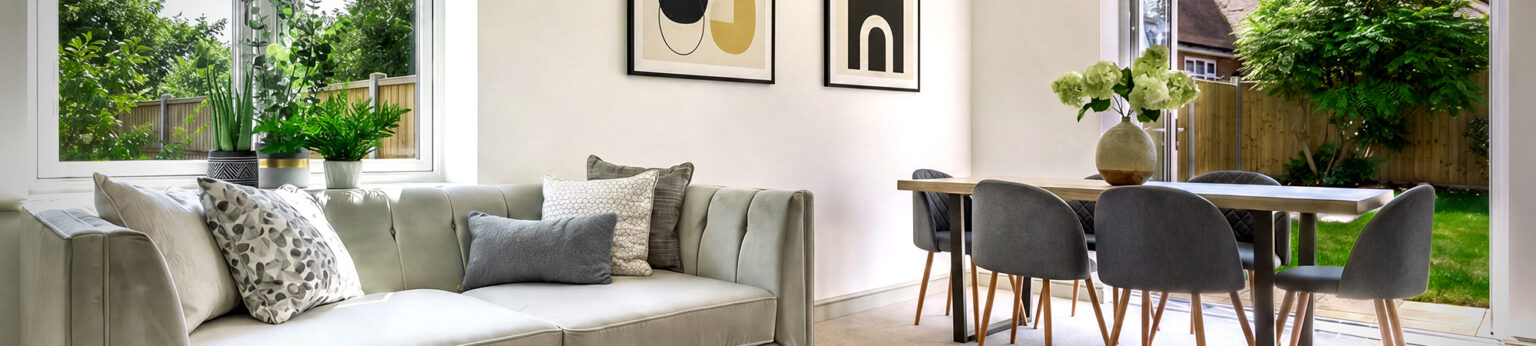
10 things we learned from building our own home
Building your own home can be incredibly rewarding, but there is a lot to think about along the way. Having been through the process ourselves, these are some of the things we learned and the advice we would give to anyone considering a similar project.
1. Consider building rather than moving
If you like where you live but need more, or simply different, space, it may be worth considering whether building a new home could be an option. Once you take into account the costs associated with moving and the potential VAT treatment available for qualifying new-build projects, the difference in overall cost may not be as great as you first think.
VAT rules for self-build projects can be quite specific, however, so make sure you understand what is and isn’t eligible before setting your budget.
2. Get planning advice early
If your site or proposed design is likely to present planning challenges, talking to a planning consultant before submitting your application could save a great deal of time and frustration. We spent two and a half years trying to get planning permission, but once we employed a planning consultant and revised the plans according to his suggestion, they were approved within two months.
With hindsight, I would have sought professional planning advice much earlier.
3. Get the structure and energy performance right from the start
You don’t see the outside walls once the house is finished, but they are some of the most important parts of the building.
It’s very easy to concentrate on the things you’ll see every day, kitchens, bathrooms, doors and finishes, but the structure and fabric of the house will always be there. The decisions you make at the build stage can also have a significant influence on how comfortable and energy efficient your finished home will be.
Think about the building as a whole. The walls, insulation, windows, airtightness, ventilation and heating all need to work together. Consider thermal performance and thermal bridging alongside structural strength, fire performance, acoustics, durability and buildability.
Energy-efficiency requirements for new homes have become increasingly demanding, so involve your architect, designer and technical specialists early. Getting the building fabric right at the design stage is far easier than trying to compensate for poor performance later.
4. Use a builder you trust
Unless you intend to be on site every day, you need to have confidence in the people carrying out the work. When choosing your builder, look at previous projects, speak to previous customers and check their experience, references and insurance.
A good working relationship is important too. Building a house takes time and there will inevitably be decisions and issues along the way, so you need to be able to communicate openly with your builder.
5. Make use of the experts
You will probably be working with an architect or designer and perhaps a structural engineer, but don’t overlook the expertise available from the manufacturers of the products and systems you’re considering.
Companies like H+H have technical teams who can provide detailed product and application information, construction details and technical guidance to help use their products appropriately. This can be particularly useful when you’re considering issues such as thermal performance, structural requirements, fire resistance, acoustics or specific construction details.
Ask questions – there is a great deal of specialist knowledge available and it makes sense to use it.
6. Plan for the future
You aren’t simply building a house for the day you move in. Think about how well it will work for you in ten, twenty or even fifty years’ time.
Consider durability, energy performance, maintenance and how your own needs might change. When you’re choosing the fundamental structure and fabric of the house, it makes sense to select materials and systems with established performance and a track record you can have confidence in.
The finishes can always be changed. The structure is there for the lifetime of the house.
7. Be clear about who’s responsible for what
Make sure everyone understands their responsibilities from the beginning – including you.
In our case, I concentrated on the structure of the house and my wife took over the interior design and fittings. Agreeing that division of responsibility at the start removed a lot of the potential for arguments.
The same principle applies to your professional team. Be clear about the responsibilities of your architect or designer, structural engineer, builder and other specialists so that important decisions don’t fall between the gaps.
8. Sort out the utilities as early as possible
Don’t underestimate how long it can take to organise services for a new home.
Electricity, water, drainage and broadband can involve different organisations, applications and lead times. Start investigating what you’ll need as early as possible and include both the cost and the timescale in your plans.
It’s much better to have the connections ready before you need them than to have a finished house waiting for essential services.
9. Talk to your neighbours
If your proposed development could affect neighbouring properties, speak to your neighbours early.
Where possible, talk to them before the planning application is lodged. Showing them what you’re proposing gives you an opportunity to explain your plans and understand any concerns they may have. Even if you can’t accommodate every concern, good communication can make the whole process easier.
10. Design in a few treats
Building your own home shouldn’t be entirely about regulations, budgets and construction details. Allow room for one or two things that will make the finished house feel special to you.
For me, it’s my Bluetooth bathroom mirror. It still makes me smile every morning.
When you’re dealing with hundreds of decisions during a build, it’s worth remembering that you’re creating somewhere you’re going to live, so give yourself some treats to enjoy once the build process is completed.